

Testing is often treated as the final technical step before launch.
In IRIS A2A, it is part of the authorization path.
Organizations cannot assume that approved credentials and purchased software automatically create a production-ready filing process. The IRS Assurance Testing System is used to verify communication, account information, file structure, software functionality, correction capabilities, and compliance with electronic-filing specifications.
For healthcare payers, this means IRIS readiness has two distinct layers:
The business must be ready.
The transmission process must also prove that it is ready.
A clean provider file that cannot move successfully through testing is not ready to file.
What Is IRIS ATS?
IRIS ATS is the test environment for Application-to-Application filing.
The IRS uses it to evaluate software and electronic communications before Software Developers, Transmitters, and Issuers move into production.
The IRS test materials explain that ATS is used to verify:
- Two-way communication with IRIS
- Transmitter accounts
- Software functionality
- Data formatting
- Compliance with electronic-filing specifications
- Combined Federal/State Filing functionality
- Correction processes
- Reduction of rejected transmissions
ATS applies to A2A.
The Taxpayer Portal does not use the same testing path.
Who Must Test?
Testing responsibilities depend on the organization’s role.
Transmitters and Issuers
Transmitters and Issuers using approved A2A software must complete a one-time communication test.
Software Developers
Software Developers must complete more extensive testing for the software package and supported forms.
A company that develops its own filing software may therefore have multiple responsibilities. It may need to test as a Software Developer and also operate under the appropriate Issuer or Transmitter role.
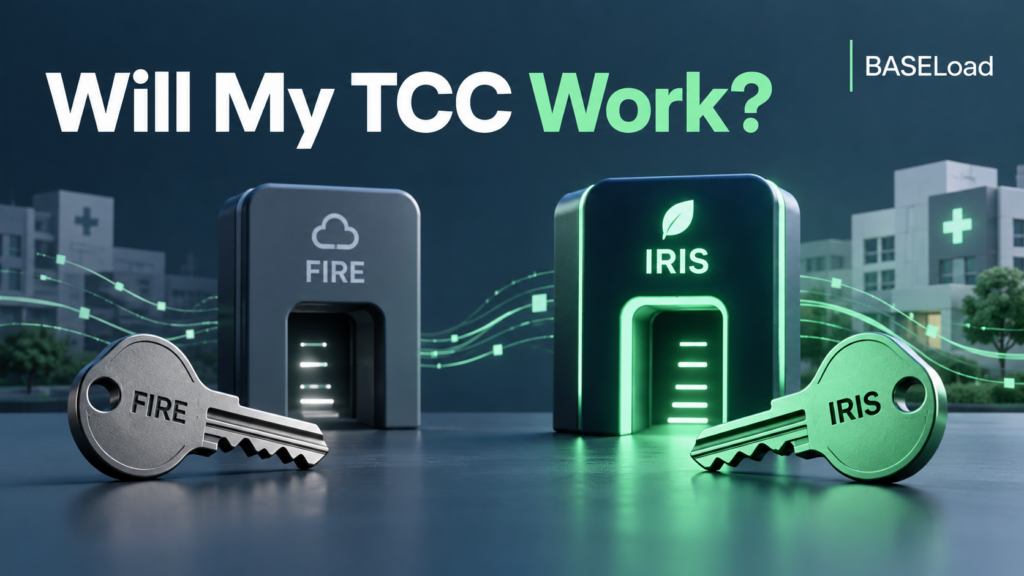
The Software Developer TCC is used for testing software. The Transmitter TCC is used for communication testing. The IRS specifically instructs organizations to use the correct TCC for the activity being performed.
Mixing those roles can produce failed tests or authorization confusion.
What Is the Communication Test?
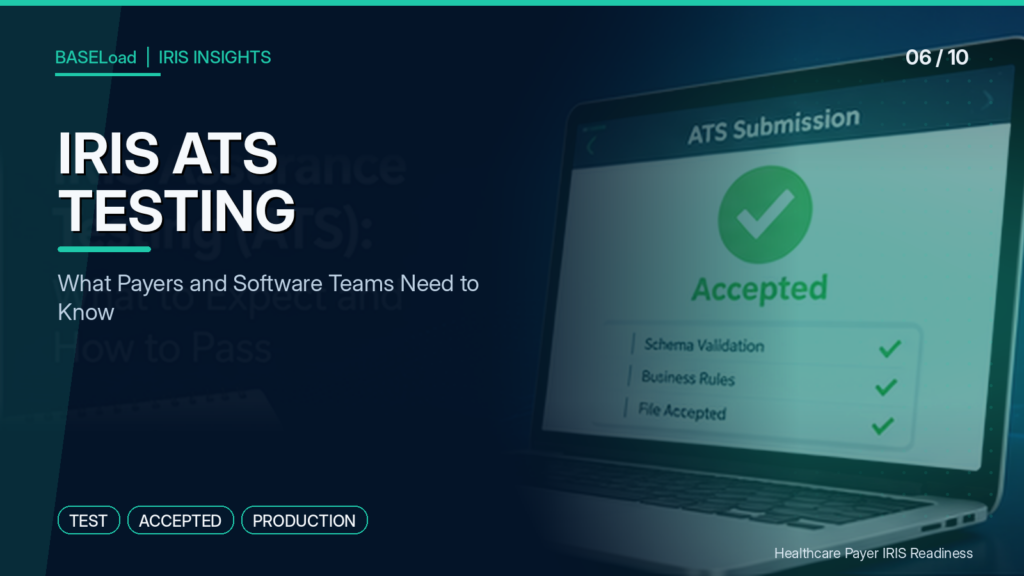
The communication test confirms that a Transmitter or Issuer can send a transmission, receive a Receipt ID, retrieve the acknowledgment, and achieve an Accepted status.
The required communication test consists of:
- One transmission
- One submission
- Two records
- An Accepted status
Once the test is accepted, the Transmitter must contact the IRS Help Desk and provide the Receipt ID. The IRS then reviews the test and moves the TCC indicator from Test to Production.
That final Help Desk step matters.
An accepted test file does not automatically mean every production indicator has been updated.
The organization should document:
- The test transmission date
- Receipt ID
- Acknowledgment
- Accepted status
- Help Desk contact date
- Incident or reference number
- Production-status confirmation
Software Developer Testing Is More Extensive
Software Developers generally must submit:
- A transmission manifest
- Five submissions
- Two records in each submission
- Ten records in total
When the software supports corrections, an additional transmission containing a corrected record is required.
When the software will participate in the Combined Federal/State Filing Program, the appropriate test record must also be included.
All required transmissions should be error-free and receive Accepted status.
The current tax-year ATS examples should be used because schemas, forms, test requirements, and business rules may change.
Testing against last year’s expectations can create a false sense of readiness.
Never Use Live Taxpayer Data in ATS
This requirement deserves its own section.
The IRS states that live taxpayer data must not be submitted in the ATS environment for Issuer or Recipient information.
Test TINs must use the prescribed dummy pattern beginning with zeros. The Transmitter information, however, must match the name and EIN contained in the TCC application.
This distinction is critical.
Testing teams need realistic records.
They do not need real provider TINs, real recipient identities, or production taxpayer data.
Using live data in a non-production environment can create both rejection risk and unnecessary exposure of sensitive information.
Test-data governance should be established before anyone begins building files.
ATS Does Not Replace Internal Testing
Passing ATS confirms that the tested transmission meets IRS requirements.
It does not prove that the organization’s entire operational process is ready.
Internal testing should also examine:
- Source-data extraction
- TIN and legal-name validation
- Address selection
- Duplicate handling
- Payment reconciliation
- File approval
- Credential access
- Submission logging
- Acknowledgment retrieval
- Error assignment
- Correction procedures
- Recipient-copy workflows
- Management reporting
A successful ATS transmission can coexist with a weak internal process.
For example, the software may send perfect XML while the payer’s source file still contains incorrect provider identities.
ATS verifies the filing connection.
The organization must verify everything feeding that connection.
Test the Failure Paths
Many project teams test whether a valid file can be accepted.
They should also test what happens when something goes wrong.
Useful internal scenarios include:
- Invalid TIN format
- Missing legal name
- Incorrect form type
- Missing required field
- Reused transmission identifier
- Wrong tax year
- Unsupported schema version
- Rejected submission
- Accepted with Errors status
- Partially Accepted transmission
- Correction required
- Replacement required
- Unavailable vendor contact
- Employee access failure
The goal is not to create chaos for entertainment.
It is to discover where chaos already exists in the process.
A team that knows how to handle a rejection during testing is less likely to improvise during filing season.
Clarify Vendor Responsibilities
When a third-party software provider or transmitter is involved, healthcare payers should determine:
- Who completes software testing?
- Who completes communication testing?
- Which TCC is used?
- Who applies for the API Client ID?
- Who receives schema packages?
- Who submits test files?
- Who contacts the Help Desk?
- Who confirms production status?
- Who retains Receipt IDs and acknowledgments?
- Who supports testing failures?
- Who handles annual software updates?
The payer should not assume that “IRIS supported” answers every question.
A product may support IRIS while still requiring the payer to complete specific authorization, communication, or operational steps.
The phrase “IRIS ready” should be unpacked until every responsibility has an owner.
Create an ATS Evidence Package
After testing is complete, retain a small evidence package containing:
- Applicable TCC
- Filing role
- Software ID
- Test environment
- Tax year tested
- Forms tested
- Receipt IDs
- Acknowledgments
- Final statuses
- Correction-test evidence, when applicable
- CF/SF test evidence, when applicable
- Help Desk communications
- Production-status confirmation
- Internal approval
This package supports continuity and auditability.
It is also useful when staff changes, vendors change, or filing-season questions arise.
Memory is not a control.
Documentation is.
Plan for Annual Change
IRIS schemas and business rules can change by processing year.
Software Developer information and Software IDs may also require tax-year updates.
The IRS maintains current schemas, known issues, ATS examples, publications, and working-group materials for organizations preparing their systems.
Healthcare payers should therefore treat testing as part of an annual readiness cycle.
The organization may not need to rebuild everything each year, but it should confirm:
- The software supports the current processing year
- Required forms remain supported
- Schema versions are current
- Known issues have been reviewed
- Test requirements have not changed
- Correction workflows still function
- Responsible contacts remain available
A process that passed last year is evidence.
It is not a lifetime warranty.
Final Thoughts
IRIS ATS testing is not bureaucratic decoration around the filing process.
It confirms that the organization, software, credentials, transmission structure, and IRS environment can communicate successfully.
Healthcare payers should begin early, use the correct TCC, protect live taxpayer data, test failure scenarios, clarify vendor responsibilities, and retain evidence of production readiness.
The purpose of testing is not merely to pass.
It is to remove surprises from the moment when the filing is real.
BASELoad Can Help You Prepare for IRIS Testing and Production
BASELoad can help healthcare payers strengthen the data and operating procedures surrounding IRIS testing.
That includes preparing cleaner provider records, resolving TIN and legal-name mismatches, improving W-9 information, identifying exceptions before live filing, and reducing the number of data problems that could complicate production submissions.
Contact BASELoad to align your provider-data preparation, filing responsibilities, and IRIS testing timeline before production deadlines begin closing in.