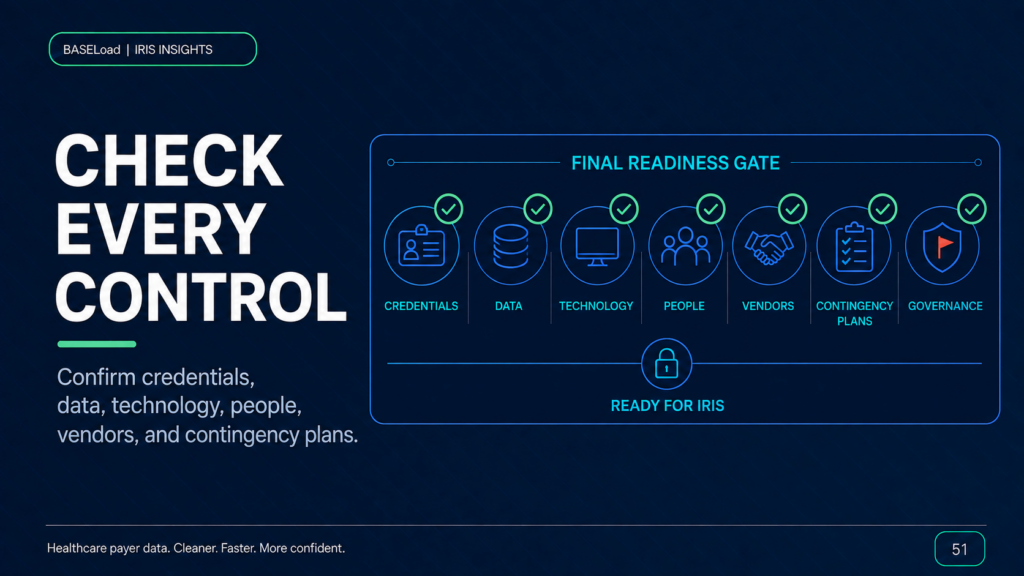


The move from FIRE to IRIS creates an immediate filing requirement.
It also creates an opportunity.
Healthcare payers can treat the transition as a narrow technology project, replacing one submission method with another.
Or they can use it to improve the provider-data process that feeds claims, payments, 1099 reporting, provider outreach, system conversions, and compliance.
The second approach creates more lasting value.
IRIS will validate the information it receives according to the applicable schemas and business rules.
It will not decide which of three provider names in the payer’s systems is the correct legal name.
It will not know whether an address belongs to the provider’s practice, billing office, corporate parent, or tax-reporting entity.
It will not resolve two internal provider IDs that represent the same taxpayer.
That work belongs to IRIS provider data governance.
Data Governance Is More Than Data Cleanup
Data cleanup is usually a project.
Data governance is an operating model.
Cleanup asks:
- Which records are wrong?
- Which fields are missing?
- Which duplicates should be resolved?
- Which addresses need correction?
Governance asks:
- Who owns each field?
- Which source is authoritative?
- Who can change the value?
- What evidence is required?
- How is the change approved?
- How does it move to other systems?
- How is the history retained?
- How is quality measured?
- What happens when sources disagree?
A payer can clean its provider file in December and still recreate the same problems by March.
Governance prevents bad information from returning quietly.
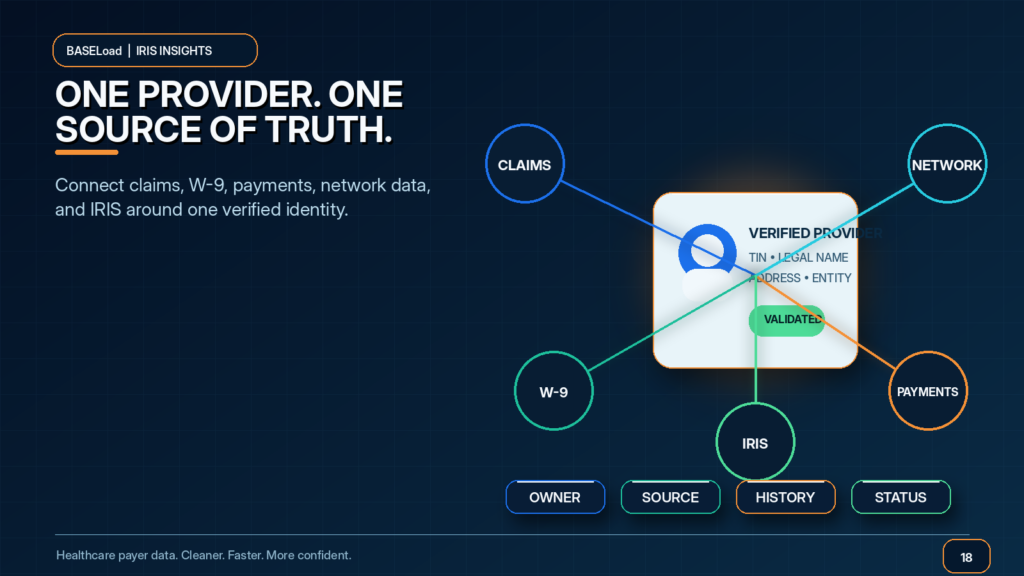
Establish a Canonical Provider Identity
Healthcare organizations often maintain different versions of the same provider across:
- Claims systems
- Contracting platforms
- Credentialing systems
- Network directories
- Payment systems
- W-9 repositories
- Provider portals
- Legacy databases
- Acquired platforms
- Manual spreadsheets
Each system may be correct for its own purpose.
The challenge is determining which identity controls tax reporting.
A canonical provider identity should connect:
- Taxpayer Identification Number
- Legal name
- Doing-business-as name
- Entity type
- Internal provider IDs
- National Provider Identifier, when relevant
- Tax-reporting address
- Payment address
- Practice address
- W-9 effective date
- Data source
- Validation status
The canonical record does not need to replace every operational system.
It needs to provide a controlled reference that explains how those systems relate.
Name the Owner of Every Critical Field
Provider-data governance fails when everyone can identify an error but no one owns the correction.
Assign clear ownership for:
- TIN
- Legal name
- Address
- Entity type
- W-9 status
- Payment total
- Form type
- State information
- Recipient-copy delivery information
- Correction status
Ownership may sit with different teams.
For example:
- Provider operations may own identity research
- Finance may own payment totals
- Tax may own form selection
- Information technology may own data movement
- Compliance may own evidence requirements
- Provider relations may own outreach
The governance model should identify both the data owner and the system owner.
They are not always the same person.
Create Source-of-Truth Rules
When two systems disagree, employees need a decision rule.
Examples:
- Does the current validated W-9 control the legal name?
- Which address is used for recipient copies?
- Can a provider’s display name be used for tax reporting?
- How is a single-member LLC handled?
- Which payment system controls the reported amount?
- What happens when the provider master and claims platform use different TINs?
- Which record controls after a merger or acquisition?
- How is a recently submitted W-9 made effective?
The answer should not depend on which employee sees the issue.
Documented source rules create consistency.
They also make errors easier to investigate because the organization can identify which control failed.
Validate at Multiple Points
IRIS provider data governance should not wait until the final filing file.
Build validation into the provider-data life cycle.
At onboarding
Confirm W-9 completeness, TIN format, legal name, entity type, and address.
Before payment
Verify that the payment record is tied to the intended provider identity.
During the year
Review new providers, changed TINs, returned mail, duplicate records, and unresolved W-9 requests.
Quarterly
Run mock filing files and investigate exceptions.
Before live filing
Reconcile payment totals, validate required fields, confirm tax identities, and approve the final population.
After filing
Review acknowledgments, corrections, CP2100 information, returned recipient copies, and repeated errors.
This distributes the work across the year instead of compressing it into filing season.
Track Data Lineage
Data lineage shows where a value came from and how it changed.
For every critical filing field, the organization should be able to identify:
- Source system
- Source record
- Original value
- Transformation
- Validation performed
- Updated value
- Date changed
- Employee or system making the change
- Supporting evidence
- Downstream systems receiving the update
Lineage is especially important when an IRIS error must be mapped back to the source.
Without it, employees may correct the final filing file while leaving the incorrect value in claims, provider, and payment systems.
The next export then recreates the error.
Build an Exception Workflow
An exception should move through a controlled process.
A useful workflow includes:
- Error identified
- Provider and record confirmed
- Source systems reviewed
- Owner assigned
- Supporting evidence requested
- Provider contacted when necessary
- Corrected value approved
- Source system updated
- Filing record updated
- Final status confirmed
- Documentation retained
- Root cause categorized
The workflow should include service-level expectations.
For example, a high-risk TIN mismatch affecting a paid provider may require faster action than a noncritical formatting issue on an inactive record.
Not every exception carries the same filing risk.
Use Structured Error Categories
Categorize exceptions so the organization can see patterns.
Useful categories include:
- Invalid TIN format
- TIN and legal-name mismatch
- Missing W-9
- Incorrect address
- Duplicate provider
- Conflicting entity type
- Missing payment amount
- Unreconciled payment
- Unsupported character
- Missing required field
- Incorrect state allocation
- Incorrect form type
- Rejected submission
- Accepted with Errors
- Provider dispute
The category should be connected to the source system, owner, resolution time, and final outcome.
That allows leadership to distinguish a one-time error from a structural data problem.
Design the Technology Around the Process
BASELoad’s internal technical overview recommends treating A2A as an asynchronous, fault-tolerant pipeline with normalization, validation, queued submission, status polling, error mapping, and correction support.
It also recommends standardizing names, TIN formats, and addresses before applying schema and business-rule validation.
Those are internal architectural recommendations rather than a substitute for the current IRS specifications.
The broader governance principle is still useful:
Do not build IRIS as an isolated upload function.
Connect it to:
- Provider-data normalization
- Validation
- Filing approval
- Submission tracking
- Error resolution
- Corrections
- Reporting
- Audit history
Technology should reinforce ownership and traceability.
It should not hide them.
Apply Security to the Data Life Cycle
Provider tax information requires careful handling.
Governance should define:
- Who may view full TINs
- Who may edit tax identities
- Who may upload W-9s
- Who may approve changes
- Which systems may store the data
- How data is encrypted
- How logs are masked
- How exports are transferred
- How vendor access is controlled
- How temporary files are deleted
- How incidents are reported
The most secure IRS connection cannot compensate for an unprotected spreadsheet emailed across the organization.
Security must follow the data from collection through retention.
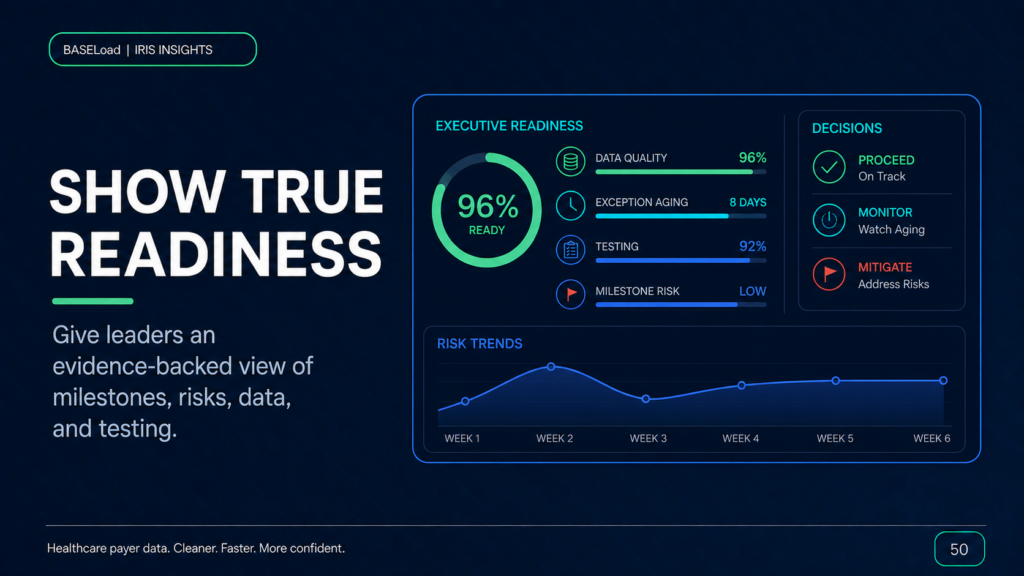
Measure Governance Performance
Leadership needs evidence that the provider-data process is improving.
Useful measures include:
- Percentage of providers with validated W-9s
- Percentage of TIN and legal-name combinations confirmed
- Number of unresolved tax-data exceptions
- Average exception age
- Duplicate-provider rate
- Returned recipient-copy rate
- IRIS acceptance rate
- Accepted with Errors rate
- Correction rate
- Replacement rate
- Errors by source system
- Repeat errors from prior years
- Manual hours spent on provider research
- Provider-outreach response rate
Metrics should lead to decisions.
If one source system generates most address errors, fix that integration.
If one provider population has low W-9 completion, change onboarding or outreach.
If the same records require corrections every year, investigate why the source record remains wrong.
Make Governance Cross-Functional
IRIS provider data governance cannot belong only to tax.
It should involve:
- Finance
- Claims
- Provider operations
- Network management
- Information technology
- Compliance
- Security
- Vendor management
- Internal audit
- Executive leadership
Each team sees a different part of the provider record.
Governance creates a shared structure for resolving conflicts among those views.
The organization does not need a large committee for every correction.
It needs agreed rules, assigned owners, and an escalation path when the rules do not resolve the issue.
Use the Transition to Remove Repeated Manual Work
The attached BASELoad client FAQ frames the practical value of IRIS around fewer errors, faster processing, improved filing tracking, and less manual handling.
Those benefits are more likely when the payer also improves the data feeding the system.
A modern filing connection attached to an unreliable provider-data process can simply deliver errors faster.
The long-term opportunity is to automate the routine work while directing people toward the exceptions that genuinely require judgment.
Final Thoughts
IRIS provider data governance turns the filing transition into a broader operational improvement.
It creates a controlled provider identity, identifies authoritative sources, assigns field ownership, tracks lineage, validates data throughout the year, standardizes exception handling, protects sensitive information, and measures results.
Healthcare payers that invest only in the final transmission may complete the technical migration.
Organizations that improve governance can reduce manual work, recurring corrections, provider confusion, and filing-season pressure for years afterward.
BASELoad Can Help Build an IRIS-Ready Provider Data Program
BASELoad’s W-9 Corrections process is designed for healthcare payers, including TPAs, PPOs, health plans, and workers’ compensation organizations. It supports proactive quarterly processing, provider outreach, TIN and legal-name correction, address improvement, CP2100 review, B-Notice support, and files assembled from multiple systems.
BASELoad can help your organization move beyond one-time cleanup and create a more reliable provider-data foundation for IRIS filing.
Contact BASELoad to begin building an IRIS provider data governance program that improves accuracy before the filing process begins.