


Provider 1099 reporting begins with a deceptively simple question: who received the payment for tax-reporting purposes? In healthcare, the answer may not be the clinician listed on a claim, the practice name displayed in a directory, or the office receiving routine correspondence. Payers need a defensible connection between payments, the correct tax recipient, and the information ultimately placed on a return.
For health plans and third-party administrators, this is both a tax-classification task and a data-management task. A well-organized filing process cannot compensate for an unresolved recipient identity. This guide explains the decisions and controls that help payer teams prepare accurate provider information before an IRS submission or recipient statement is produced.
Which form applies to provider 1099 reporting?
Medical and healthcare payments made in the course of a trade or business generally fall within Form 1099-MISC box 6 when applicable reporting requirements are met. The IRS instructions for Forms 1099-MISC and 1099-NEC specifically address payments by medical and healthcare insurers. Do not classify every nonemployee provider payment as Form 1099-NEC merely because the recipient is outside your organization.
For 2026 payments, the applicable threshold for medical and healthcare payments is generally $2,000, subject to the relevant rules and exceptions. Historical returns need the rules for their own tax year. Medical payments to corporations also have a specific exception to the general corporate reporting exemption. Tax-exempt hospitals and certain government-owned facilities have separate treatment. Have your tax owner evaluate the recipient and payment facts rather than relying on a single corporate-status flag.
Build a reporting identity distinct from the operational record
Provider systems often store several identifiers for legitimate reasons. One group can have multiple service locations, contracts, billing arrangements, and internal record numbers. Conversely, similar practice names can belong to different legal entities. The reporting process must resolve these relationships without flattening every operational distinction into one record.
Document the fields that define the tax recipient: legal name, taxpayer identification number, relevant classification, and delivery details. Maintain links back to the provider records and source documents used to support the decision. An NPI should not be substituted for a TIN. A familiar practice name should not automatically displace the tax name supplied through an appropriate documentation process.
When two records appear related, ask what evidence supports combining them for reporting. When a provider changes ownership, determine which payments belong to each entity and retain effective dates. These decisions are easier to review when the reporting dataset includes stable internal references instead of a loose spreadsheet of names and amounts.
Make W-9 collection a controlled workstream
Start collection and exception review before year-end totals are finalized. Separate missing documentation from documentation that has been received but not reviewed. A completed file in an inbox is not yet an approved update to the provider master. Track receipt, review, discrepancies, and the final record change as distinct steps.
Use clear outreach that explains who is requesting the information and how the provider can return it securely. Avoid placing full tax IDs in email subject lines or broad distribution lists. Give providers a way to verify the request through a known contact. A trustworthy collection process reduces confusion for legitimate recipients and supports consistent handling by your own team.
BASELoad’s W-9 Corrections service includes direct provider outreach and collection as part of its broader tax-data preparation offering. Ask how exception categories, progress reporting, and approved updates will fit your workflow. The service scope should make clear which decisions remain with your tax or compliance team.
Reconcile payment sources before applying reporting rules
List every source that contributes provider payments. Include separate claims platforms, acquired books of business, manual adjustments, and any accounts-payable streams in scope. Record who owns each extract and how completeness is established. An accurate file from one system does not prove that the organization has captured the entire reporting population.
Reconcile totals as the data moves through the process. Explain excluded records, adjustments, and consolidations. Preserve the distinction between a payment reconciliation issue and a recipient-identity issue so the right team investigates it. A tax-data specialist should not be expected to invent the accounting treatment of a disputed payment.
Consider an illustrative payer with three internal records for the same tax recipient. Reviewing each record independently could miss the combined payment amount or produce duplicate statements. A documented crosswalk helps the reporting team aggregate appropriately while claims operations continues using the records needed for day-to-day processing.
Prepare the approved data for the chosen IRIS route
The IRS IRIS overview describes the Taxpayer Portal and Application to Application channels. Determine whether your team will use the portal, software, or a third-party transmitter. Then agree on the exact layout and evidence required at the handoff. A provider-data export is not automatically a submission-ready file.
Test representative records, including long names, leading zeros, multiple addresses, and records that required review. Confirm that approved values survive transformation into the filing layout. Save the version used for testing and record the result. The aim is to show that the entire path works, not merely that one clean demonstration record can be uploaded.
BASELoad has received official IRS production approval for the IRIS environment. Live data submissions and response-file testing are planned for January 2027. Ask BASELoad how its preparation services and evolving IRIS workflow fit your intended engagement; confirm specific responsibilities rather than assuming every service includes the same filing tasks.
Plan for provider questions and corrections
Recipient statements often generate questions about payment totals, legal names, addresses, or ownership changes. Give the support team a defined route to research each type of question. Where possible, provide a reference that connects the statement to approved source records without exposing sensitive information to staff who do not need it.
A correction request should trigger a documented decision. Determine whether the original return was wrong, whether the provider is describing a later change, and which filing procedure applies. Keep the original record and the reason for any replacement or correction. Overwriting history makes it harder to explain what was reported and why.
Provider 1099 reporting checklist
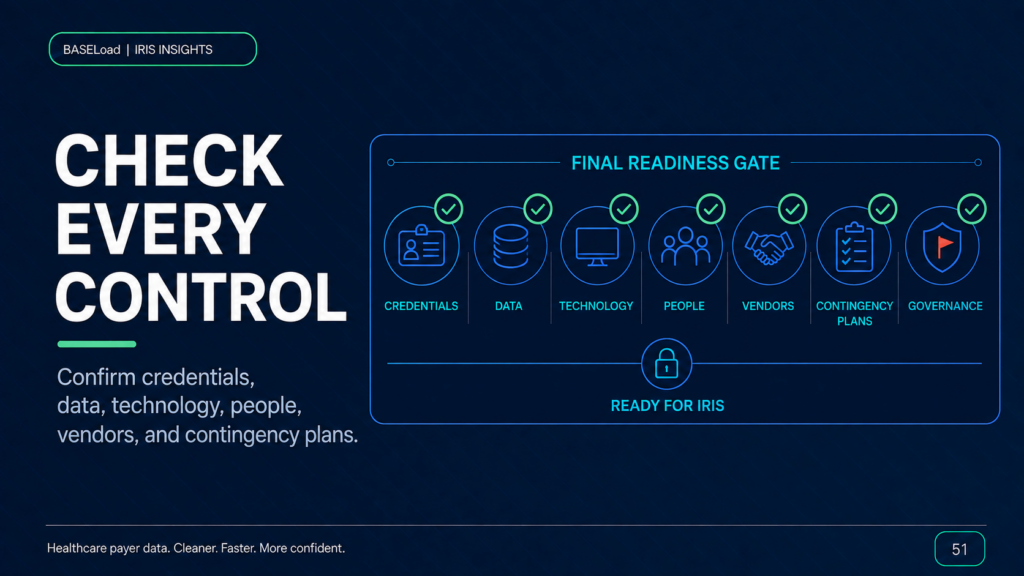
Before release, confirm that each source has been received, the payer identity is correct, payment classifications have approval, and reporting recipients are supported by reviewed records. Check that totals reconcile, unresolved cases have dispositions, and the filing operator has the intended version. Assign an owner for IRS responses and a separate contact for recipient questions.
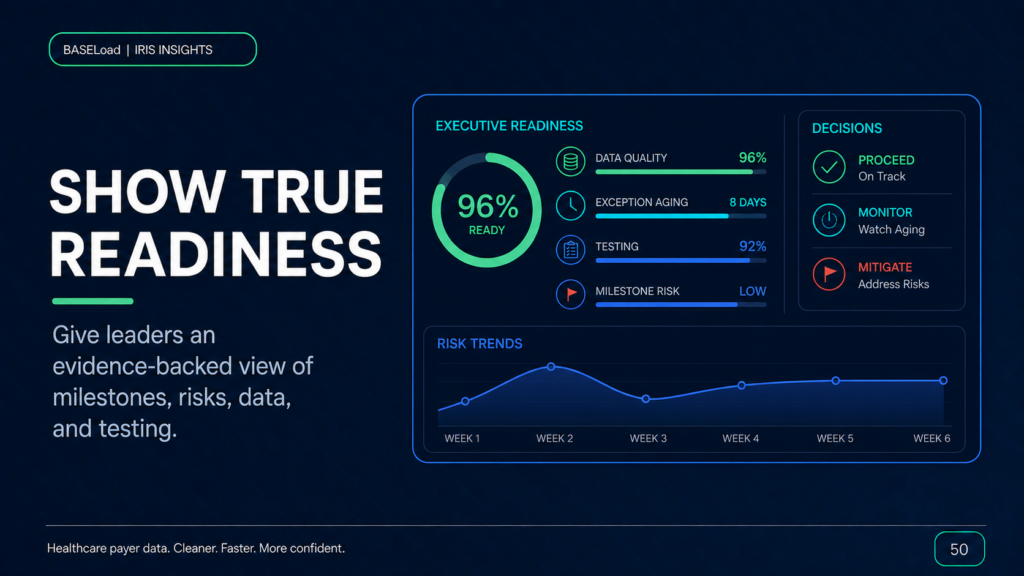
Use the checklist to identify blocked decisions rather than to manufacture a reassuring completion percentage. Ten unresolved identity cases can matter more than thousands of routine records already processed. Track exception age and next action so leadership can direct help where it changes the outcome.
Build a repeatable process with BASELoad
Provider 1099 reporting becomes more manageable when tax identity, documentation, payment reconciliation, and filing ownership are addressed throughout the year. BASELoad can help payer teams assess provider-data problems and scope correction or outreach work. Bring an aggregate exception summary and your target handoff date to a BASELoad consultation.
For additional preparation tools, visit the IRIS Resource Hub. Use this guide as an operational planning resource, alongside current IRS instructions and advice from your organization’s tax professionals. The right process gives your team a clear explanation for each reported recipient, amount, and subsequent change.