

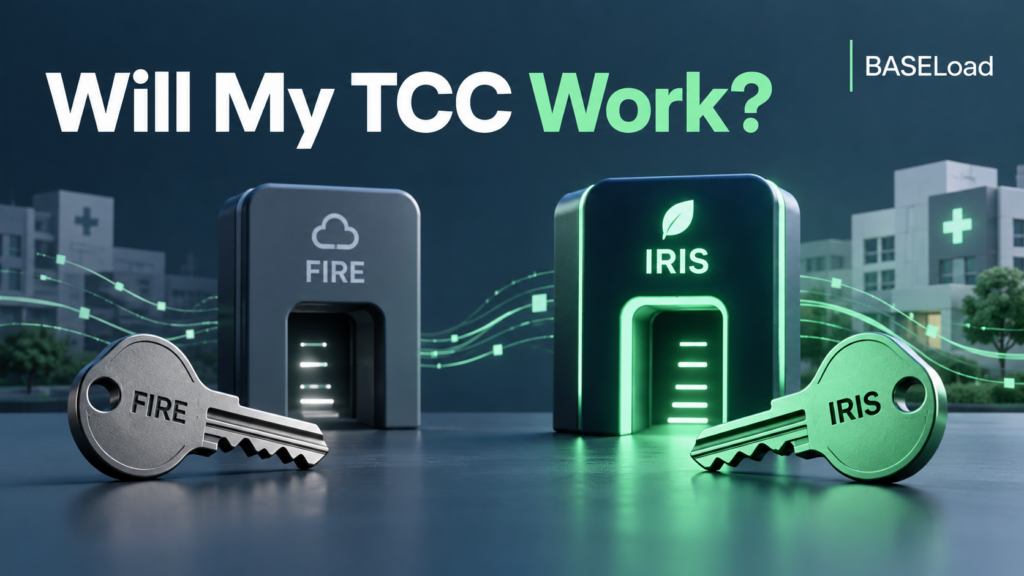
“Will my 2025 TCC number work?” is the right question to ask before the next filing season, but the answer depends on the system and authorization attached to that code. A FIRE Transmitter Control Code does not become an IRIS TCC simply because it was issued recently. If your code was issued for IRIS, verify its current status, organization, role, and transmission method rather than assuming it needs replacement because the calendar changed.
For healthcare payers, this distinction can prevent a late discovery that the planned filing route is unavailable. A code, a user login, software access, and a clean provider tax file are separate pieces of readiness. This guide shows how to confirm each without confusing one successful step with completion of the entire process.
A 2025 FIRE TCC does not transfer to IRIS
The IRS IRIS Taxpayer Portal guide explains that TCCs obtained for other filing systems, including FIRE, cannot be used in the IRIS Taxpayer Portal. The first question is therefore not when the code was issued, but which application produced it. Look at the official application record and the system name rather than a spreadsheet label that simply says “TCC.”
The IRS FIRE retirement announcement requires current FIRE users to transition to IRIS for the 2027 filing season. It identifies November 19, 2026, at 3 p.m. Eastern as the last FIRE filing date. A valid FIRE code does not remove the need to prepare a supported IRIS route.
If the code is already an IRIS TCC, check its details
Do not submit a duplicate application merely because an existing IRIS code was issued in 2025. First review the organization’s application, status, authorized people, and intended filing method. The IRS IRIS application page links to the application and current step-by-step instructions. Use those official records to determine whether an update or a different authorization is needed.
Your organization may have changed since the original application. Staff may have left, responsibilities may have moved to a different entity, or a new vendor may handle transmission. Capture those changes and review their implications through the official process. An old confirmation email is useful history, but it does not prove that today’s operators can perform the planned work.
Match the authorization to the filing route
IRIS offers a Taxpayer Portal and an Application to Application channel. The portal supports browser-based entry and CSV upload; software-based arrangements use the A2A path. Confirm which channel your team intends to use and what the relevant IRS and vendor requirements are. Do not assume that access to one channel automatically establishes readiness for another.
If a third party transmits, ask whose TCC and authorization will be used, which party operates the system, and what your organization must provide. The answer should be documented in the engagement and onboarding plan. Buying software, contracting for data cleanup, and hiring a transmitter are different arrangements even when a vendor markets them under one broad service name.
Separate user access from organizational authorization
A team member may successfully sign in to an IRS service without the organization being ready to submit the intended information returns. Conversely, an organization may have an approved application while its current operators lack the access they need. Test both sides of the relationship through the appropriate official workflow.
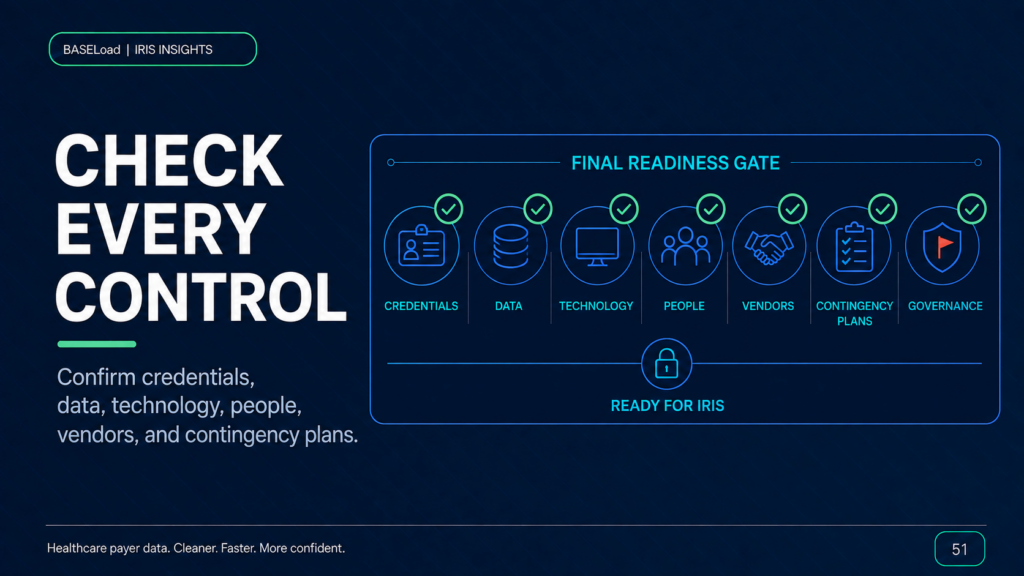
Maintain a small access inventory that identifies the responsible official, authorized operators, backup coverage, and support contact. Store references securely; do not circulate passwords or authentication codes in project spreadsheets. Use individual authorized access and the organization’s normal access-review procedures. Preparing a backup operator is more reliable than sharing one person’s login during a deadline emergency.
Verify software readiness independently
Ask the software provider or transmitter to explain its onboarding, testing, supported forms, and response-handling process. A TCC does not prove that a particular export layout is supported. Request a documented test plan that represents your real reporting population, including the forms and exception cases your payer organization expects to file.
Choose sample cases with long legal names, leading-zero identifiers, multiple payer entities, and corrected provider records. Confirm how each travels from your source system to the filing layout. Where testing is required, follow the prescribed environment and procedures. Do not send real production data to an unapproved test location simply to demonstrate connectivity.
Keep provider data preparation moving while access is resolved
An application issue should not stop work on missing W-9s, inconsistent legal names, or incomplete provider addresses. These tasks can often progress in parallel with technical onboarding. Assign owners to the two workstreams and keep their dependencies visible so the filing team knows what will be ready and when.
BASELoad’s provider tax-data preparation services can help address the information feeding your filing process. BASELoad has also received official IRS production approval for the IRIS environment. Live data submissions and response-file testing are planned for January 2027. Discuss the specific scope and timing of your engagement rather than interpreting production approval as proof that your own file has been tested or accepted.
A short TCC verification worksheet
Record the system name, organization, application status, intended channel, operational owner, and next action. Add the date the information was checked and a secure reference to the supporting record. Avoid placing the full code in widely shared status reports when a restricted reference will do. Leadership usually needs readiness and ownership, not the credential itself.
For an illustrative payer, the worksheet might reveal that the “2025 TCC” belongs to FIRE while the planned vendor workflow uses IRIS A2A. That is an actionable gap: confirm the vendor’s transmission arrangement and the payer’s remaining onboarding responsibilities. It is more informative than a green status based only on the existence of an old code.
Common questions about a 2025 TCC
Does every payer need to use its own TCC?
The answer depends on who transmits and the chosen arrangement. Confirm the requirements with the IRS instructions and the actual filing provider. Do not apply an in-house portal checklist unchanged to a fully outsourced transmission engagement.
Does a TCC confirm that a return was accepted?
No. Authorization and submission disposition are separate. Your team still needs to review the responses for each submission and address outstanding issues. Keep evidence of both access readiness and filing outcomes.
What if we cannot tell which system issued the code?
Have an authorized person review the application records through IRS.gov and consult the appropriate IRS support resources if the record remains unclear. Avoid guessing based on the code’s appearance or the year it was recorded internally. The organization and application history are the useful evidence.
Turn the answer into a filing-readiness plan
The practical answer to “will my 2025 TCC number work” is to verify the system first, then the authorization and filing route. Combine that review with provider-data cleanup, software preparation, operator access, and response monitoring. Visit BASELoad’s IRIS Resource Hub or contact the team to discuss your preparation needs. Follow current IRS instructions for your particular application and filing obligations.