

For years, many healthcare payers have treated the IRS FIRE system as a familiar, if somewhat dated, part of the annual information-return process.
Files were prepared. Files were uploaded. Status reports were retrieved. Errors were investigated. Corrections were made. Then the organization moved on until the next filing season began creeping back onto the calendar.
That familiar process is ending.
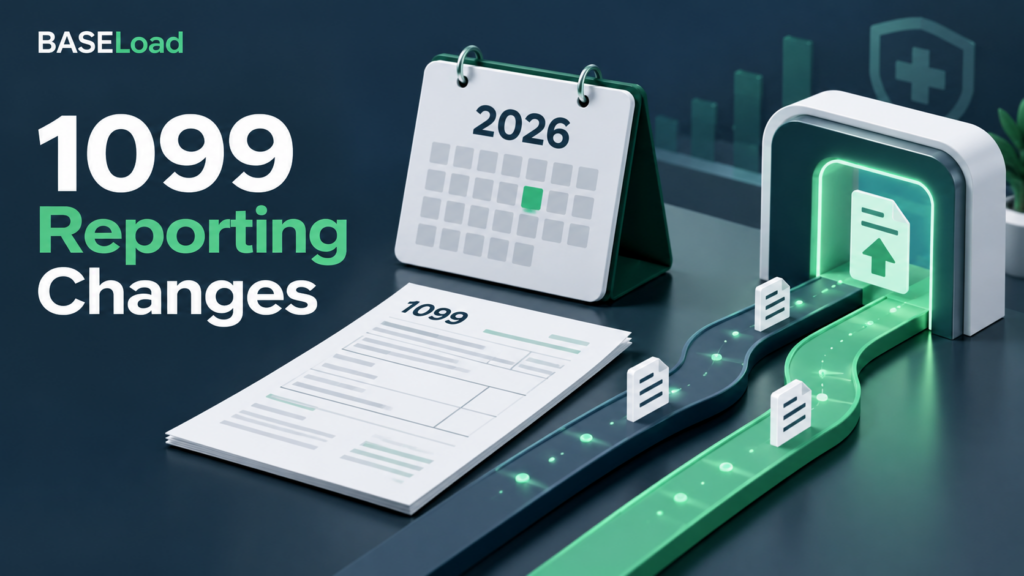
The IRS is retiring the Filing Information Returns Electronically system and moving information-return filing to the Information Returns Intake System, commonly known as IRIS. Current FIRE users must transition to IRIS to file tax year 2026 information returns during the 2027 filing season. Beginning in 2027, forms previously supported through FIRE will instead be available through IRIS.
For healthcare payers, this is not simply a change in where someone clicks “submit.”
It is a change in filing infrastructure, authorization, testing, data validation, submission tracking, correction workflows, and operational responsibility.
The deadline is visible.
The work underneath it is where the real transition lives.
The FIRE Deadline Is Closer Than “End of 2026”
Many transition discussions have described FIRE as retiring at the end of 2026. That summary is directionally correct, but it is no longer precise enough for operational planning.
The IRS has published three important dates:
- November 1, 2026: The last day to submit test information returns through the FIRE Trading Partner Test System.
- November 9, 2026: The last day to make changes to existing Information Returns Applications for FIRE Transmitter Control Codes.
- November 19, 2026, at 3 p.m. ET: The last day to submit information returns through FIRE.
After the November maintenance window, FIRE will no longer accept information-return submissions. Tax year 2026 returns filed during the 2027 filing season must move through IRIS.
That distinction matters.
Organizations that are building their transition plans around December 31 may believe they have several additional weeks that do not actually exist. For operations teams, finance leaders, technology departments, and compliance stakeholders, November is the practical edge of the map.
Waiting until the final FIRE submission date to begin preparing for IRIS would be like starting a system conversion on the day the old server is unplugged.
IRIS Is a Different Filing Environment
IRIS receives information returns through two channels:
IRIS Taxpayer Portal
The Taxpayer Portal is a free, web-based filing option. It allows users to enter information manually or upload data through a CSV file. Filers can submit up to 100 returns at a time, download payee copies, and maintain records of completed and filed forms.
IRIS Application to Application
Application to Application, or A2A, is designed for organizations using third-party software, filing services, or internally developed systems. It supports higher-volume filing through software-based transmission rather than manual portal entry.
The attached IRIS materials describe A2A as the bulk-filing channel and the Taxpayer Portal as the lower-volume option.
For most large healthcare payers, TPAs, PPOs, health plans, and workers’ compensation organizations, the practical conversation will center on A2A or a qualified third-party transmitter.
High provider counts, multiple claim platforms, large 1099 populations, recurring corrections, and complex internal approval processes rarely fit neatly into a manual filing workflow.
Your Existing FIRE TCC Will Not Move with You
One of the most important transition requirements is also one of the easiest to overlook.
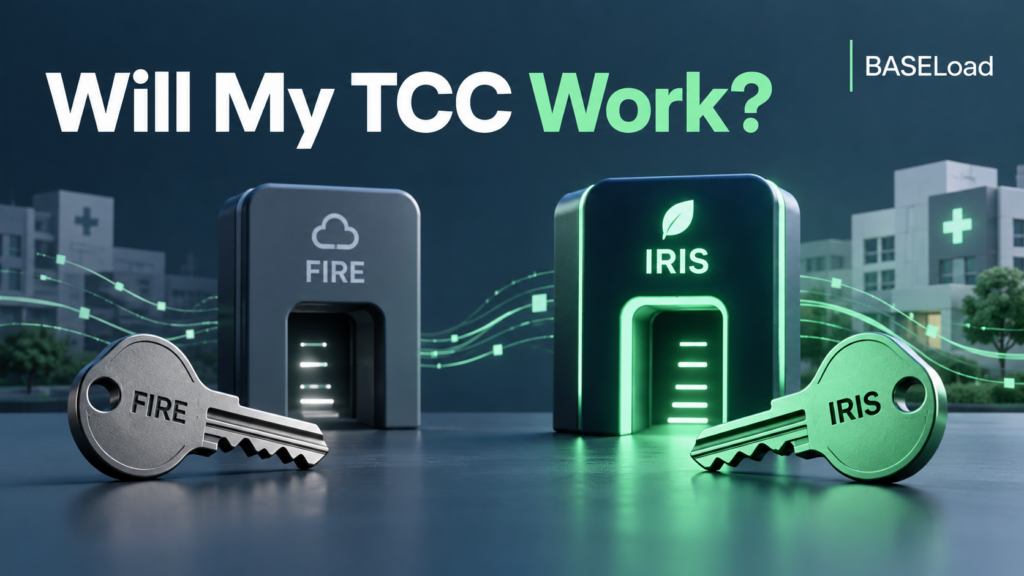
A FIRE Transmitter Control Code cannot be used to file through IRIS.
IRIS TCCs are specific to the IRIS intake system. Other TCCs, including FIRE, AIR, and separate IRIS Portal or A2A TCCs, are not interchangeable. Organizations using IRIS A2A must apply for the appropriate IRIS TCC, select the correct role, and complete the related onboarding steps.
The IRS advises organizations to allow up to 45 calendar days for an IRIS TCC application to be processed. Applications may involve Responsible Officials, authorized users, identity verification, legal business information, filing roles, and transmission-method selections.
That processing window should be treated as a planning constraint, not a suggestion.
A TCC application that is started late, completed incorrectly, or waiting on an unavailable Responsible Official can delay every activity behind it.
Without the appropriate IRIS TCC, an organization cannot simply pivot into A2A testing or production filing.
The Transition Touches More Than the Tax Department
The annual 1099 process may sit under finance, accounting, operations, or compliance, but the FIRE to IRIS transition reaches across several teams.
Finance may own filing accountability.
Provider-data teams may own the information used to identify payees.
Claims teams may manage source records and payment data.
Information technology may own exports, integrations, credentials, APIs, access controls, and file movement.
Compliance and security teams may oversee sensitive taxpayer information.
Procurement or vendor management may need to confirm that a filing provider supports the required IRIS capabilities.
Executive leadership may only see the process when it breaks.
That is why IRIS readiness cannot be assigned to one employee with a deadline and a login. The organization needs a shared operating plan that identifies who owns each dependency.
A successful transition answers questions such as:
- Who is applying for the IRIS TCC?
- Which filing role should the organization select?
- Will filing occur through the Portal, A2A software, or a third-party transmitter?
- Who prepares and validates provider data?
- Who reviews filing acknowledgments?
- Who owns corrections and replacements?
- Where will Receipt IDs and filing records be retained?
- What happens when a transmission is rejected?
Those are workflow questions, not just IRS questions.
Data Readiness Comes Before Filing Readiness
IRIS introduces more structured validation, but a modern filing channel does not repair weak source data by itself.
If provider records contain incorrect Taxpayer Identification Numbers, inconsistent legal names, outdated addresses, duplicated entities, missing fields, or conflicting information across systems, those issues will still reach the filing process unless they are resolved upstream.
The platform may identify a problem more clearly.
It does not necessarily solve the problem for you.
Healthcare payer data is especially vulnerable because provider information may be distributed across claims platforms, payment systems, contracting records, credentialing files, W-9 repositories, legacy databases, and manually maintained spreadsheets.
When those sources disagree, the filing team becomes the last stop for years of accumulated data drift.
That is why organizations should not begin IRIS preparation with the submission screen.
They should begin with the records that will eventually reach it.
Testing Is Part of the Transition
Organizations using IRIS A2A must account for Assurance Testing System requirements.
Transmitters must complete an error-free communication test using approved software. The IRS test package describes the communication test as one transmission containing one submission and two records. Once the transmission is accepted, the transmitter must contact the IRS Help Desk and provide the Receipt ID so the TCC can be moved from Test to Production.
Software developers have additional testing requirements, including multiple submissions, correction testing when supported, and Combined Federal/State Filing testing when applicable.
Testing is not a ceremonial final step.
It confirms that credentials, software, identifiers, files, transmission methods, acknowledgments, and status-retrieval processes can work together.
A payer may have clean data and still be operationally unready if the filing connection has not been tested.
Status Tracking Will Become More Important
IRIS A2A uses Receipt IDs, unique transmission identifiers, submission identifiers, record identifiers, and acknowledgments to track filings.
Possible statuses include:
- Accepted
- Rejected
- Processing
- Partially Accepted
- Accepted with Errors
- Not Found
Each status can require a different operational response.
That means “we sent the file” is not a complete filing control.
Organizations need to know whether the transmission was received, whether it finished processing, whether every submission was accepted, whether errors were returned, and whether a correction or replacement is required.
The acknowledgment is not administrative clutter.
It is the filing outcome.
Start with an IRIS Readiness Map
A practical FIRE to IRIS transition plan should document five areas:
Authorization
Confirm the correct IRIS TCC, filing role, Responsible Officials, authorized users, and credentials.
Filing Channel
Choose the Taxpayer Portal, A2A software, or a third-party transmitter based on volume, automation needs, correction requirements, security expectations, and staffing.
Data Quality
Review TIN and legal-name combinations, provider addresses, duplicate records, missing fields, W-9 information, and source-system alignment.
Testing
Complete required A2A communication or software testing well before live filing season.
Post-Submission Operations
Define how acknowledgments, errors, Receipt IDs, corrections, replacements, and audit documentation will be handled.
This turns the transition from a vague compliance project into an executable operating plan.
Final Thoughts
The FIRE to IRIS transition is not simply an IRS technology refresh.
It changes the path information returns take from provider data to final acceptance.
Organizations that focus only on the submission method may discover too late that their real obstacles are incomplete authorizations, unreliable provider data, untested workflows, unclear ownership, or missing correction procedures.
The safest approach is to work backward from production filing.
Start with the outcome you need: accurate, accepted, traceable information returns.
Then make sure every step leading to that outcome is ready.
BASELoad Can Help You Navigate the Transition to IRIS
BASELoad works with healthcare payers, TPAs, PPOs, health plans, and workers’ compensation organizations to improve the provider data behind the 1099 process. Its services include correcting TIN and legal-name mismatches, resolving address issues, supporting W-9 collection, validating provider tax information, and reducing the administrative workload placed on internal teams.
The move to IRIS should not force your organization to carry a larger manual burden. In most cases, clients can continue providing data through an established process while BASELoad helps prepare cleaner information and support a more reliable filing workflow. The intended result is fewer errors, improved tracking, less manual handling, and greater confidence in filing confirmation.
Contact BASELoad to begin an IRIS readiness conversation before the final FIRE deadlines arrive.