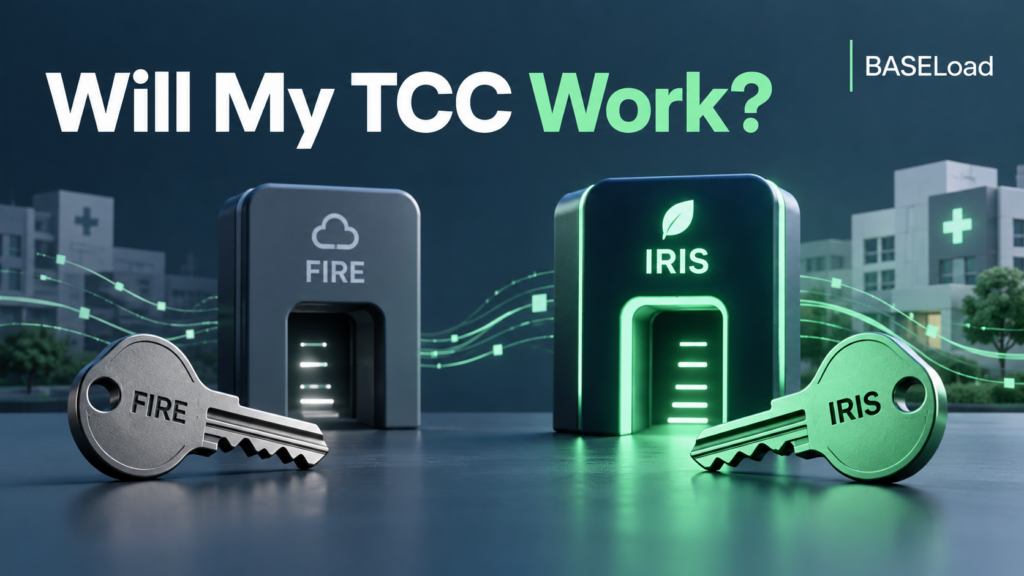


The transition from FIRE to IRIS has a firm destination.
What many organizations still lack is a map.
The IRS has established the final operational dates for FIRE. Test submissions end November 1, 2026. Changes to existing FIRE TCC applications end November 9. The final deadline to submit information returns through FIRE is November 19, 2026, at 3 p.m. ET. Tax year 2026 information returns filed during the 2027 filing season must move through IRIS.
Those dates tell healthcare payers when the old filing route closes.
They do not tell organizations when to appoint a project owner, apply for the correct IRIS TCC, choose a filing channel, test software, clean provider data, train employees, or rehearse the filing workflow.
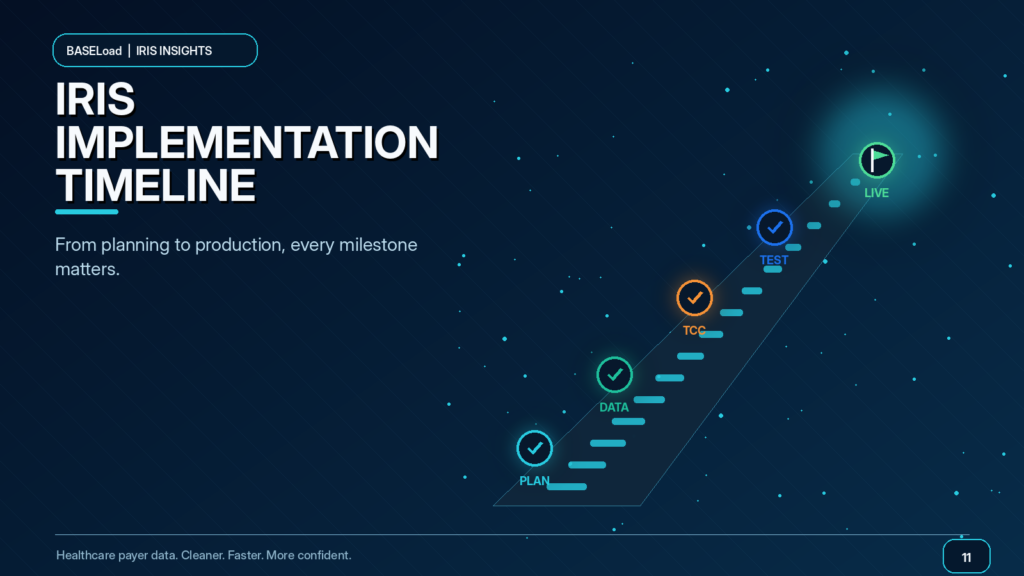
That is why every payer needs an IRIS implementation timeline built around operational readiness rather than the final IRS deadline.
A useful timeline works backward from the result the organization needs: accurate information returns, transmitted through the correct system, accepted by the IRS, supported by complete records, and followed by a reliable process for errors and corrections.
The Deadline Should Not Be the Project Plan
A common transition mistake is treating the final FIRE date as the date by which the organization needs to start using IRIS.
That is too late.
A payer using Application to Application filing may need to:
- Apply for an IRIS-specific TCC
- Obtain an API Client ID
- Receive current schema materials
- Configure or purchase compatible software
- Complete IRIS Assurance Testing System requirements
- Pass communication testing
- Confirm production status
- Prepare and validate provider data
- Define acknowledgment and correction workflows
The IRS advises organizations to allow up to 45 calendar days for an IRIS TCC application to be processed. That period begins after the organization has determined the correct role, gathered the required business information, registered its authorized users, and secured all Responsible Official signatures.
A 45-day application window can quickly become a 90-day internal project when executive schedules, account access, vendor decisions, and incomplete information are added.
The safest IRIS implementation timeline therefore begins well before filing season.
Phase 1: Establish Leadership and Ownership
The first phase should focus on governance.
Appoint an executive sponsor who can resolve cross-functional issues. The sponsor does not need to understand every schema element. The sponsor needs enough authority to make sure finance, claims, provider data, information technology, compliance, and vendor management remain aligned.
Next, identify a project owner.
This person should maintain the master timeline, coordinate meetings, track dependencies, document risks, and report readiness to leadership.
The project owner should also identify the internal stakeholders responsible for:
- Filing accountability
- Provider-data preparation
- W-9 collection
- Payment reconciliation
- TCC administration
- Software or vendor management
- Testing
- Security
- Acknowledgment monitoring
- Corrections and replacements
- Recipient-copy distribution
One person does not need to complete every task.
One person does need to know whether every task has been completed.
Phase 2: Define the Filing Model
The next phase is to determine how the organization will use IRIS.
IRIS has two intake channels. The Taxpayer Portal supports manual entry and CSV uploads for lower-volume filing. A2A allows larger volumes to be transmitted through third-party or internally developed software.
The IRS currently lists the main A2A onboarding sequence as applying for an A2A TCC, obtaining an API Client ID, receiving a schema package, and successfully completing ATS transmissions before sending production data.
Healthcare payers should evaluate:
- Annual number of information returns
- Number of issuers
- Number of source systems
- Frequency of corrections
- Internal technical capacity
- Available staff
- Security requirements
- Audit requirements
- Existing filing vendors
- Need for automated status tracking
The filing model should be approved before the organization applies for roles and transmission methods that may not match its eventual process.
Phase 3: Complete IRIS Authorization
Once the filing method is known, the organization can move into authorization.
For A2A, the payer must determine whether it will act as an Issuer, Transmitter, Software Developer, or an appropriate combination of roles.
A FIRE TCC cannot be reused in IRIS.
An IRIS Taxpayer Portal TCC is also not interchangeable with an IRIS A2A TCC. Each role and transmission method can require a separate code.
The authorization phase should include:
- Confirming the legal entity and EIN
- Selecting the correct role
- Selecting the transmission method
- Identifying Responsible Officials
- Identifying Contacts and Authorized Delegates
- Creating or confirming IRS user accounts
- Completing identity verification
- Obtaining required signatures
- Tracking application status
- Recording the assigned TCC
Do not let this information live only inside one employee’s inbox.
Create an internal authorization record that identifies the TCC, role, owner, application date, approval date, and associated filing system.
Phase 4: Assess Provider-Data Readiness
Authorization gives the organization permission to file.
It does not make the data ready to file.
Healthcare payers should conduct an early assessment of the provider information that will eventually become part of the 1099 process.
That assessment should measure:
- TIN and legal-name mismatches
- Missing W-9s
- Outdated addresses
- Duplicate provider records
- Conflicting provider identities
- Missing required fields
- Payment reconciliation issues
- Records tied to inactive entities
- Errors that repeated from prior filing seasons
- Providers requiring direct outreach
This phase should happen early enough to allow research and provider communication.
Waiting until the final file is created leaves the organization with two choices: rush through corrections or submit questionable data.
Neither is an attractive operating model.
Phase 5: Configure and Test the Filing Process
For A2A filers, software and communication testing are required before production.
Testing should verify more than whether a sample file can reach the IRS.
It should also verify:
- Correct TCC usage
- Correct software identification
- Current schemas and business rules
- Secure credential access
- File creation
- Internal approval
- Transmission
- Receipt ID retrieval
- Acknowledgment retrieval
- Error assignment
- Correction procedures
- Production-status confirmation
The filing team should retain the test Receipt IDs, acknowledgments, Help Desk references, approval evidence, and production confirmation.
Testing is complete only when the organization can prove the process worked and knows what to do when it does not.
Phase 6: Run an Internal Filing Rehearsal
Before live filing begins, run a rehearsal using a representative sample of provider records.
The rehearsal should begin with source-system extraction and continue through data validation, approval, transmission, status retrieval, error handling, correction, reporting, and record retention.
Include at least one intentionally flawed record.
A test that includes only perfect data may confirm that the happy path works while leaving every exception process untouched.
Ask employees to demonstrate:
- Who finds the error
- Who receives the notification
- Who researches the provider
- Who approves the change
- Who updates the source system
- Who resubmits the record
- Who verifies final acceptance
- Who documents the outcome
This turns the IRIS implementation timeline into an operating process rather than a technology checklist.
Phase 7: Prepare for Live Filing
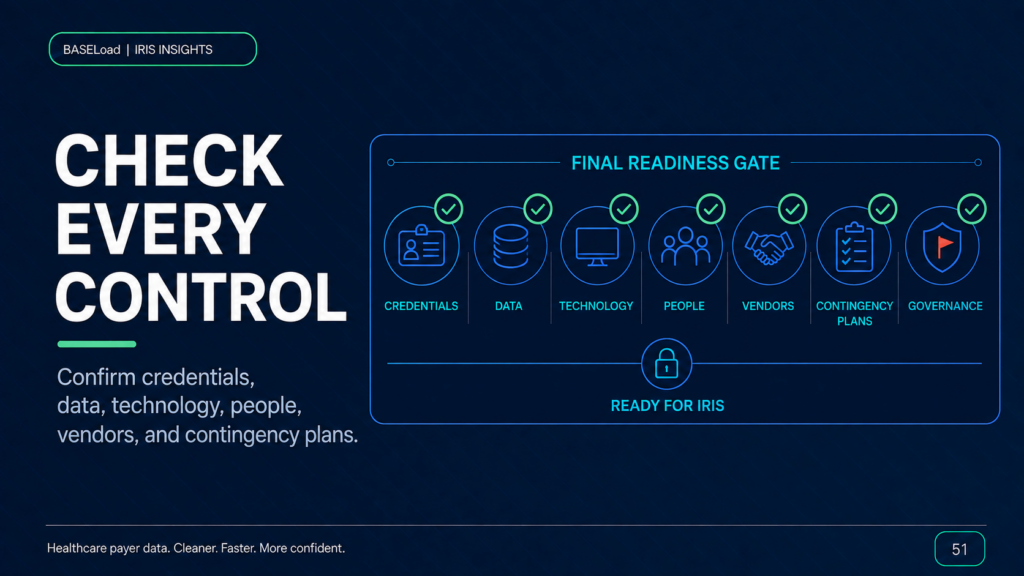
As filing season approaches, confirm that every major dependency is ready.
The final readiness review should include:
- TCC active and correct
- Production access confirmed
- Software current
- Vendor responsibilities documented
- Provider data reviewed
- Open exceptions assigned
- Payment totals reconciled
- Testing evidence retained
- Filing calendar approved
- Acknowledgment monitoring assigned
- Correction workflow documented
- Security access reviewed
- Leadership reporting prepared
The organization should also establish an internal filing deadline earlier than the IRS deadline.
Submitting early creates room to respond to errors, vendor delays, software issues, unavailable employees, and unexpected provider-data questions.
Submitting at the last possible moment converts every minor problem into a major one.
What Leadership Should Monitor
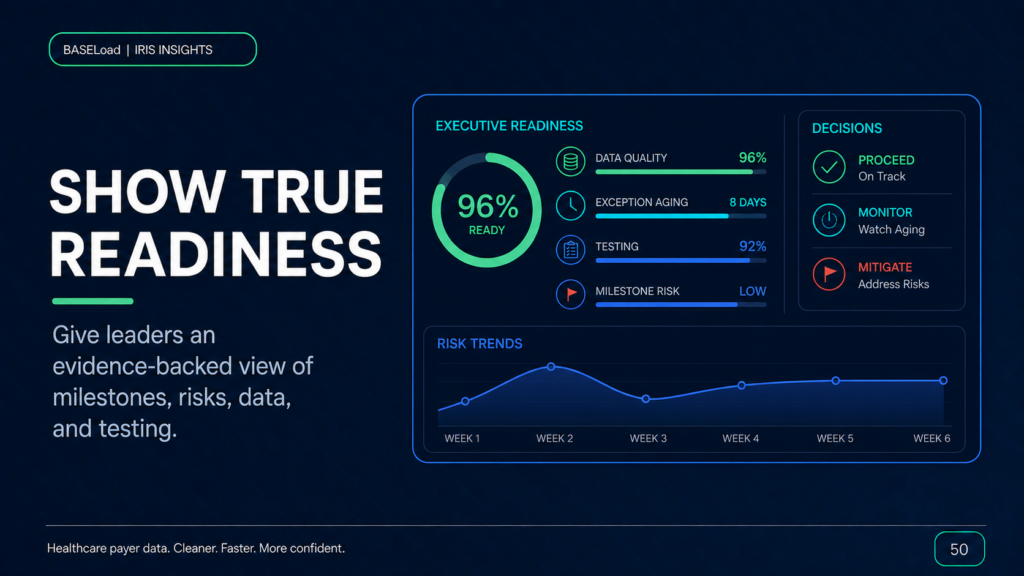
Executive leadership does not need a dashboard filled with XML terminology.
It needs a clear view of readiness.
A useful executive report might include:
- Overall completion percentage
- TCC status
- Filing-method status
- Software and testing status
- Number of provider records reviewed
- Number of unresolved provider exceptions
- W-9 outreach progress
- Vendor readiness
- Security review status
- Highest current risk
- Next milestone
- Responsible owner
The purpose is not to create another reporting obligation.
It is to identify stalled work while there is still time to correct it.
Keep the Timeline Current
IRIS schemas, business rules, known issues, and guidance can change during the year.
The IRS recommends using QuickAlerts and its monthly IRIS Working Group meetings to stay informed about system changes, maintenance, and filing guidance.
The project owner should therefore review the timeline regularly.
A useful IRIS implementation timeline is not a static slide created during kickoff.
It is a living operational document that changes when requirements, vendors, data conditions, or internal responsibilities change.
Final Thoughts
The FIRE retirement date is an external deadline.
IRIS readiness is an internal capability.
Healthcare payers that begin early can separate the work into manageable phases: leadership, filing strategy, authorization, data preparation, technical testing, process rehearsal, and live operations.
Organizations that wait may be forced to address every dependency at once.
The transition will happen either way.
The timeline determines whether it feels controlled or chaotic.
BASELoad Can Help You Navigate the IRIS Implementation Timeline
BASELoad helps healthcare payers address the provider-data work that sits underneath a successful IRIS implementation. Its W-9 Corrections process includes proactive provider outreach, TIN and legal-name correction, address improvement, quarterly mock processing, and preparation of cleaner filing data for TPAs, PPOs, health plans, and workers’ compensation organizations.
BASELoad can help your organization identify data risks earlier, reduce the year-end cleanup burden, and build a more reliable path from provider records to accepted information returns.
Contact BASELoad to begin building an IRIS implementation timeline around your organization’s actual data, systems, and filing responsibilities.