

IRIS readiness is easy to describe in one sentence.
Get a TCC, choose a filing method, and prepare for 2027.
The actual work does not fit inside one sentence.
Healthcare payers may need to coordinate executive leadership, finance, tax operations, provider data, claims, information technology, compliance, security, procurement, and third-party filing vendors.
Each group controls a different dependency.
If one dependency remains unfinished, the entire process can stall.
A TCC without testing is incomplete.
Testing without clean provider data is incomplete.
Clean data without a correction workflow is incomplete.
A transmitted file without a final acknowledgment is incomplete.
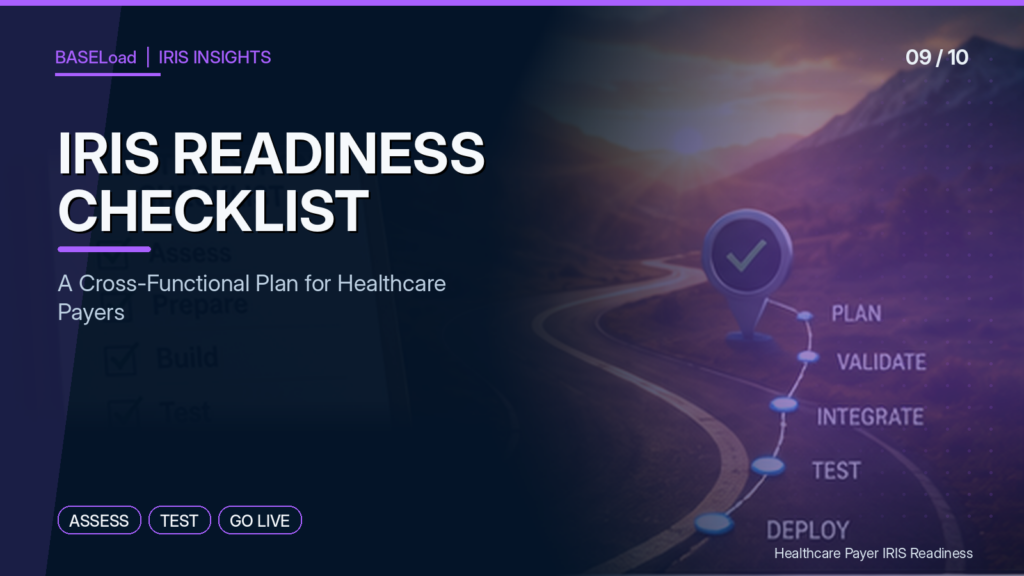
The following IRIS readiness checklist is designed to help payer organizations turn a broad transition requirement into assigned, measurable work.
1. Confirm the Actual FIRE Deadlines
Do not build the transition calendar around the vague phrase “end of 2026.”
The IRS currently lists:
- November 1, 2026, as the last day for FIRE test submissions
- November 9, 2026, as the last day to change FIRE TCC applications
- November 19, 2026, at 3 p.m. ET, as the last day to submit information returns through FIRE
Tax year 2026 information returns filed during the 2027 filing season must be submitted through IRIS.
Add those dates to the project calendar.
Then create earlier internal deadlines.
The IRS deadline should be the outside boundary, not the target completion date.
2. Name an Executive Sponsor
The transition needs an executive sponsor who can resolve ownership questions and unblock cross-functional decisions.
That sponsor may come from:
- Finance
- Operations
- Information technology
- Compliance
- Administration
- Provider operations
The role does not require the executive to manage file specifications.
It requires someone with enough authority to make sure the work does not disappear between departments.
The LinkedIn campaign appropriately prioritized Directors while continuing to reach Vice Presidents and CXOs because the transition affects both operational execution and executive accountability.
3. Assign a Project Owner
The project owner should maintain:
- The readiness plan
- Deadlines
- TCC status
- Filing-method decision
- Vendor responsibilities
- Testing progress
- Data-quality issues
- Correction procedures
- Risks
- Executive reporting
One owner does not mean one person completes every task.
It means one person knows whether every task has an owner.
Without that central view, each department may believe another department is handling the transition.
4. Confirm the Filing Population
Document:
- Estimated number of information returns
- Form types
- Number of issuers
- Number of source systems
- Filing states
- Combined Federal/State Filing participation
- Historical correction volume
- Prior-year filing requirements
- Provider populations
- Expected growth
The IRS requires electronic filing when an organization has 10 or more information returns in a calendar year, subject to the aggregation rules.
For most payer organizations, the more important question is not whether electronic filing is required.
It is which electronic filing model can support the organization’s volume and complexity.
5. Select the Filing Method
Choose among:
- IRIS Taxpayer Portal
- Purchased A2A software
- Internally developed A2A software
- Third-party transmitter or filing service
Document why the method was selected.
The Portal supports up to 100 returns at a time through manual entry or CSV upload. A2A supports larger software-driven filing volumes.
The decision should account for:
- Volume
- Staffing
- Automation
- Corrections
- Security
- Reporting
- Technical resources
- Vendor support
- Cost
- Business continuity
6. Complete the IRIS TCC Application
Confirm:
- Correct legal entity
- Correct EIN
- Correct filing role
- Correct transmission method
- Responsible Officials
- Authorized Delegates
- Contacts
- User accounts
- Required signatures
- Submission date
- Application status
- Assigned TCCs
The IRS advises allowing up to 45 calendar days for processing.
Do not begin this step after every other project activity is complete.
Many downstream activities depend on it.
7. Complete A2A Technical Onboarding
For A2A, determine who owns:
- API Client ID application
- Schema access
- Software configuration
- Secure credentials
- Test environment
- Production environment
- Status retrieval
- Error mapping
- Logging
- Software updates
The IRS identifies the A2A sequence as obtaining an appropriate TCC, obtaining an API Client ID, receiving the schema package, and completing ATS transmissions before production use.
Document whether each task belongs to the payer, software provider, transmitter, or development team.
8. Complete ATS and Communication Testing
Confirm:
- Correct TCC used for testing
- Current tax-year ATS examples
- Synthetic test data
- Required submissions
- Accepted status
- Receipt IDs
- Help Desk review
- Production indicator
- Testing evidence retained
Transmitters must complete the required communication test. Software Developers have additional submission requirements.
Do not place live taxpayer data into ATS.
9. Assess Provider-Data Quality
Measure:
- TIN and legal-name mismatches
- Missing W-9s
- Invalid addresses
- Duplicate providers
- Missing required fields
- Conflicting source records
- Unreconciled payments
- Returned recipient copies
- Prior CP2100 issues
- Repeat corrections
Assign owners and deadlines to every unresolved exception.
Data cleanup should occur before the live file is assembled.
10. Define the Submission Workflow
Document:
- Who prepares the file
- Who validates it
- Who approves it
- Who transmits it
- Who retrieves the Receipt ID
- Who monitors Processing statuses
- Who reviews acknowledgments
- Who escalates errors
- Who confirms final acceptance
- Who reports completion to leadership
A file should never enter a state where everyone assumes someone else checked the result.
11. Define Corrections and Replacements
Create procedures for:
- Accepted records requiring correction
- Accepted with Errors statuses
- Rejected transmissions
- Partially Accepted transmissions
- Incorrect form types
- Corrected recipient copies
- UniqueRecordId retention
- Replacement references
- Approval of resubmissions
- Source-system updates
IRIS uses different procedures depending on whether the original record was accepted or the transmission was rejected.
Train the operations team on the distinction.
12. Confirm Vendor Responsibilities
Obtain written answers to:
- Who transmits?
- Which TCC is used?
- Who completes testing?
- Who receives acknowledgments?
- Who retains Receipt IDs?
- Are corrections supported?
- Are replacements supported?
- How quickly are errors communicated?
- How is sensitive data protected?
- What happens if the vendor is unavailable?
- Can the payer export complete filing records?
The IRS advises filers using third-party transmitters to obtain the submitted electronic records, Receipt IDs, acknowledgments, statuses, and error details.
13. Review Security Controls
Confirm:
- Role-based access
- Secure transfer
- Encrypted storage
- TIN masking
- Test-data controls
- Credential ownership
- Vendor access
- Logging
- Incident response
- Access removal
- File-retention schedules
- Data-deletion procedures
Security review should cover the entire provider-data path, not only the IRS connection.
14. Build Management Reporting
A useful readiness dashboard may include:
- TCC status
- Filing method
- Testing status
- Provider records reviewed
- Open data exceptions
- W-9 outreach status
- Vendor readiness
- Security review
- Correction workflow status
- Overall risk
- Next milestone
- Responsible owner
Leadership does not need every XML detail.
It does need a reliable view of whether the organization will be ready.
15. Run a Filing Rehearsal
Before live season, conduct a full internal rehearsal.
Walk a sample population through:
- Source extraction
- Data cleanup
- Approval
- File creation
- Validation
- Transmission
- Status retrieval
- Error handling
- Correction
- Recipient-copy workflow
- Record retention
- Management reporting
The rehearsal should include at least one failure.
A perfect demonstration may look reassuring while hiding every weak handoff.
16. Review Readiness After Filing
After the first IRIS filing cycle, conduct a structured review.
Ask:
- What failed?
- What took longer than expected?
- Which errors repeated?
- Which vendor handoffs were unclear?
- Which reports were missing?
- Where did manual work accumulate?
- Which provider records required correction?
- Which controls should change before the next cycle?
The transition is not complete when the first file is accepted.
That acceptance creates the first real evidence about how the process performs.
Final Thoughts
An IRIS readiness checklist should do more than confirm that forms were completed.
It should connect authorization, software, data, people, security, testing, submission, corrections, and evidence into one operating model.
Healthcare payers do not need every employee to become an IRIS expert.
They do need every critical responsibility to have an owner.
That is how a regulatory deadline becomes a controlled transition instead of an organizational fire drill.
BASELoad Can Help Complete Your IRIS Readiness Plan
BASELoad can help healthcare payers address the provider-data and 1099 preparation work inside the broader IRIS transition.
That includes TIN and legal-name validation, W-9 collection, address correction, exception management, cleaner filing data, and reduced manual workload for internal teams.
Contact BASELoad to review your IRIS readiness checklist and identify the provider-data issues that should be resolved before live filing begins.