

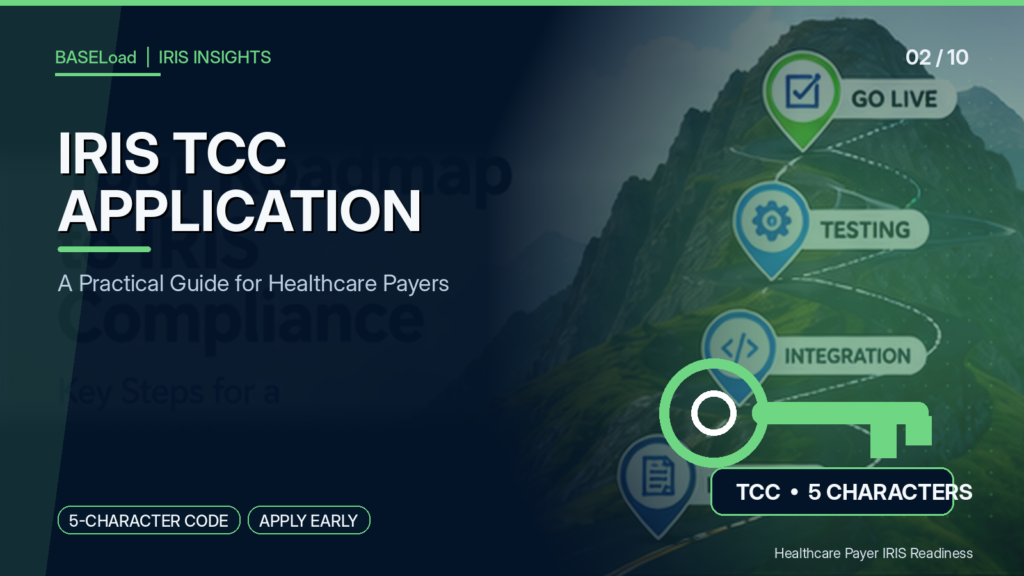
The IRIS TCC application may look like one administrative item inside a much larger filing-system transition.
It is not.
The Transmitter Control Code is one of the first operational gates between an organization and the IRS Information Returns Intake System. Without the appropriate IRIS TCC, a payer cannot simply reuse its FIRE credentials, begin A2A testing, or assume its filing vendor can solve every authorization issue later.
A TCC identifies the business participating in electronic information-return filing through IRIS. It is tied to the organization’s role and transmission method, and it can only be used within the IRIS environment.
For healthcare payers preparing for the 2027 filing season, the IRIS TCC application should be treated as an early project milestone.
Not a December chore.
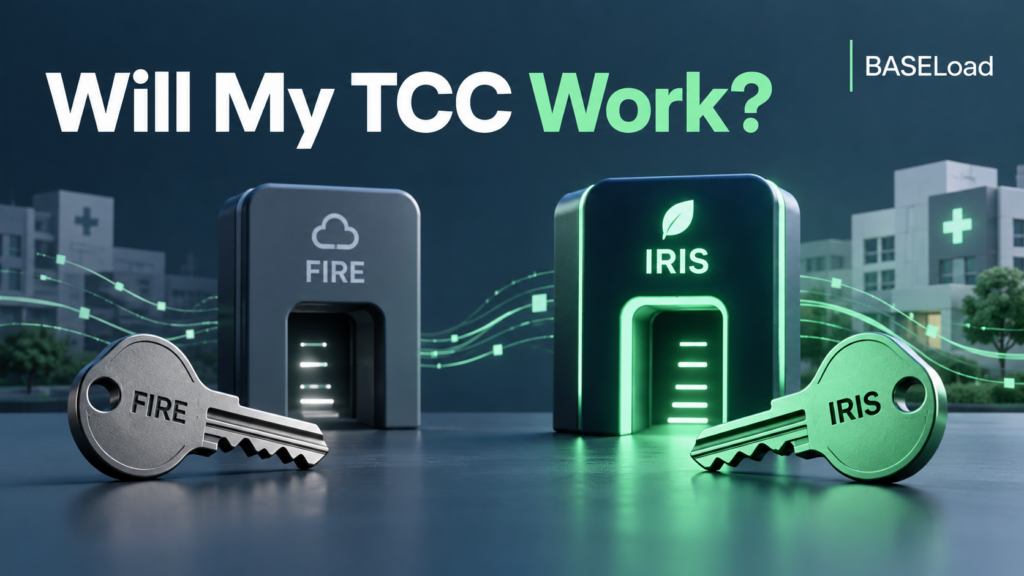
A FIRE TCC Is Not an IRIS TCC
The most important rule is simple:
TCCs do not transfer between IRS intake systems.
A FIRE TCC can only be used with FIRE. An IRIS Taxpayer Portal TCC is not automatically an IRIS A2A TCC. An Affordable Care Act TCC does not provide access to IRIS. The IRS identifies these as separate authorizations for separate filing environments.
That means an organization with years of FIRE filing history may still be starting from the beginning for IRIS authorization.
This can feel counterintuitive to experienced filing teams. The company has already been approved. The IRS already knows the transmitter. The organization already has a code.
But the intake system has changed, and the authorization has changed with it.
Assuming the old TCC will continue working is one of the fastest ways to turn filing readiness into a last-minute emergency.
What the IRIS TCC Application Does
The purpose of the IRIS Application for TCC is to request authorization to participate in electronic filing through IRIS.
The application currently covers information returns such as Forms 1042-S, 1097, 1098, 1099, 3921, 3922, 5498, and W-2G. The IRS has also announced that additional forms will be accepted through IRIS beginning with filing year 2027.
The application establishes:
- The legal organization requesting access
- The people authorized to act for that organization
- The role the organization will perform
- The transmission method it expects to use
- The TCC or TCCs associated with those selections
This is why the application should not be completed casually by whoever happens to have time.
Incorrect role selection can create downstream problems in testing, production access, and filing responsibility.
Understanding the Available Roles
IRIS A2A identifies three primary roles.
Issuer
An Issuer files information returns for the business identified on the application using the same Employer Identification Number.
For example, a health plan filing only its own information returns through purchased software may operate as an Issuer.
Transmitter
A Transmitter sends information returns directly to the IRS on behalf of one or more businesses.
A Transmitter may file for other companies and may also transmit its own company’s returns. The IRS notes that a Transmitter does not need a separate Issuer role merely to include its own returns.
Software Developer
A Software Developer creates software that prepares or transmits information returns according to IRS specifications.
An organization may be both a Software Developer and a Transmitter, but each role receives its own TCC. The Software Developer TCC is used for testing and is not used to send production files.
For healthcare payers, the correct selection often depends on who will actually press the digital button.
Will the payer transmit its own information?
Will a third party transmit on its behalf?
Is the organization developing its own software?
Will purchased software be used while the payer remains responsible for transmission?
Those are not semantic distinctions. They determine authorization and testing requirements.
The Filing Method Also Matters
The IRIS TCC application must align with the filing method the organization plans to use.
The Taxpayer Portal and A2A are separate channels. The Portal supports manual entry and CSV uploads, while A2A supports software-driven bulk transmission.
An organization should decide which method fits its needs before completing the application.
A payer that selects the Portal but later determines that it requires A2A automation may need additional authorization work. A payer preparing for A2A should also plan for an API Client ID, schema access, Assurance Testing System transmissions, and production readiness.
The TCC is therefore not an isolated credential.
It sits at the beginning of a chain.
Who Needs to Be Involved
The application requires participation from individuals who have authority within the organization.
A Responsible Official initiates and submits the application. Responsible Officials must review and sign the terms of agreement using their individual PINs. Authorized users may need IRS or ID.me accounts so their identities can be verified.
The attached TCC tutorial describes Responsible Officials as individuals with responsibility for and authority over the business entity. It also distinguishes Authorized Delegates and Contacts, each of whom may have different responsibilities in maintaining the application and responding to IRS inquiries.
This creates a practical scheduling issue.
If the application depends on executives, officers, compliance leaders, or other authorized individuals, the filing team should confirm their availability in advance.
An application should not stall because one signer is traveling, has left the organization, cannot access an account, or was never informed that a PIN would be required.
Information to Gather Before Starting
The IRS application process may require:
- Employer Identification Number
- Legal business name
- Business structure
- Doing-business-as name, when applicable
- Physical business address
- Mailing address
- Business phone information
- Filing role
- Transmission method
- Information about Responsible Officials, Contacts, and Authorized Delegates
- Personal identity information for authorized users
- The forms the organization expects to support
A physical business location is required. A post office box may be used for mailing in some circumstances, but not as the physical business address.
Gathering this information before opening the application reduces the risk of rushed selections, incomplete records, or inconsistent legal details.
It also gives the organization an opportunity to confirm that the information matches its formal records.
Allow Time for Processing
The current IRS A2A specifications advise applicants to allow up to 45 calendar days for application processing. The status and assigned TCCs can be monitored through the Application Summary page.
Forty-five days can disappear quickly.
It does not include the internal time needed to:
- Determine the correct filing role
- Identify Responsible Officials
- Create or recover user accounts
- Collect personal and business information
- Obtain signatures
- Correct application issues
- Coordinate with a software provider
- Apply for an API Client ID
- Receive schema materials
- Complete testing
For an A2A organization, the TCC is not the finish line.
It is permission to enter the next section of the course.
Keep the Application Current
An approved TCC application should not be placed in a digital drawer and forgotten.
Organizations change.
Responsible Officials leave.
Business addresses move.
Contacts change roles.
New filing methods are adopted.
Software support expands.
An outdated application can create access problems precisely when the organization needs support most.
A practical governance process should require periodic review of:
- Responsible Officials
- Authorized Delegates
- Contacts
- Business and mailing addresses
- Filing roles
- Transmission methods
- Software information
- TCC status
This review should be scheduled during a lower-pressure part of the year, not during live filing season.
The best time to discover that the IRS still lists a former employee is not while a rejected transmission is waiting for attention.
Coordinate with Your Filing Provider
Using a third-party service does not eliminate the need to understand how authorization works.
The IRS advises organizations using third-party transmitters to confirm that the provider supports the capabilities the organization needs. Some providers may not support corrections or replacements. The filer should also obtain copies of the electronic records, Receipt IDs, acknowledgments, filing statuses, and error details associated with submissions made on its behalf.
Healthcare payers should ask their filing provider:
- Which TCC will be used?
- What role does the provider perform?
- Does the payer also need an Issuer or Transmitter TCC?
- Who will complete communication testing?
- Who receives IRS acknowledgments?
- Who retains Receipt IDs?
- Who handles corrections and replacements?
- How will the payer verify that filing was accepted?
A strong provider should make these responsibilities clearer, not foggier.
Build a TCC Ownership Record
Every healthcare payer should maintain a simple internal record containing:
- TCC type
- Filing role
- Transmission method
- Application tracking number
- Responsible Officials
- Authorized users
- Date submitted
- Date approved
- Current status
- Associated software or service provider
- Testing status
- Production status
- Renewal or review date
This creates continuity when employees change roles or vendors change.
It also prevents the TCC from becoming institutional folklore, known only to one person who keeps the details in an email folder.
Final Thoughts
The IRIS TCC application is easy to underestimate because it appears administrative.
In practice, it determines who is authorized, how the organization will file, which testing path applies, and whether production access will be available when filing season begins.
Healthcare payers should complete the application early, choose roles carefully, involve the right officials, and document ownership from the beginning.
A TCC is only five characters.
The process surrounding it is much larger.
BASELoad Can Help You Navigate the IRIS TCC Process
BASELoad can help healthcare payers place the IRIS TCC requirement inside a broader transition plan that includes filing-method decisions, provider-data preparation, W-9 and 1099 workflows, error management, and operational ownership.
BASELoad’s work with payer organizations is built around reducing the manual burden associated with inaccurate provider tax data, including TIN and legal-name mismatches, address problems, incomplete W-9 information, and year-end correction activity.
Contact BASELoad to review your IRIS authorization, data, and filing workflow before the TCC application becomes a bottleneck.